What Makes an Image Archetypal and Why Viewers Never Forget It
The Difference Between Typical and Archetypal
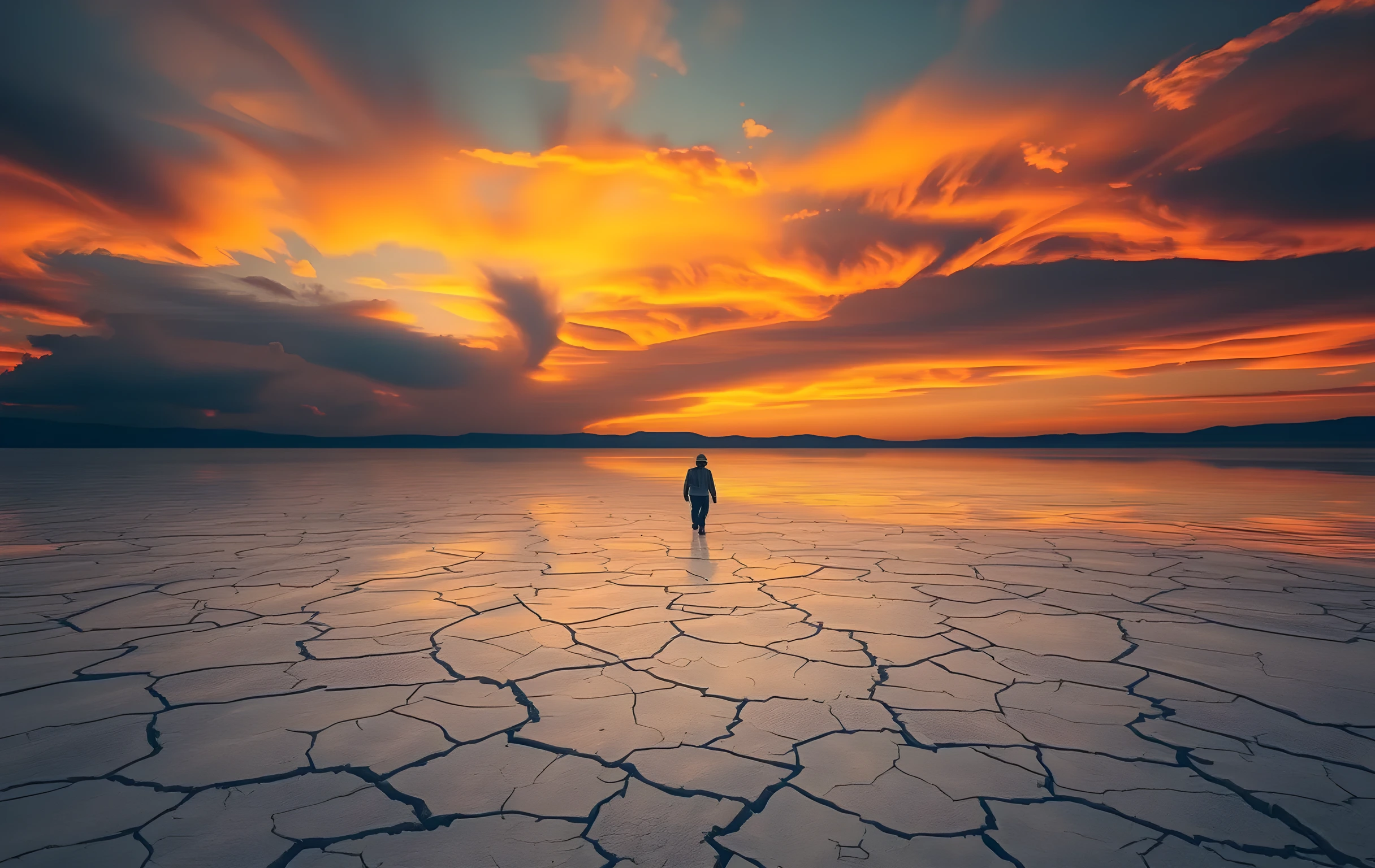
A typical image is statistically common. There are millions of photographs of forests, oceans, and city skylines, and any one of them fits the label without distinction. An archetypal image is something else entirely: a specific visual composition that triggers a deep, pre-verbal recognition in the viewer. The forest archetypal image is not a drone shot of a treeline. It is the path disappearing into low mist, the canopy arched like a vaulted ceiling, the quality of silence you can almost hear through the glass. The ocean archetypal image is not a postcard beach. It is the flat grey expanse at dawn with no horizon in sight and a single small boat far off to starboard.
The distinction matters because the two types of image do different work in a viewer's mind. A typical image informs; it tells you what something looks like. An archetypal image resonates; it connects the specific scene to a pattern the viewer already carries inside them, so the image feels less like a picture and more like a memory they did not know they had. In practice, this is why certain paintings have hung in churches for five hundred years while equally skilled contemporaries faded from view within a generation. The enduring work speaks to a layer of recognition that outlasts trend.
For working visual artists, designers, and filmmakers, the practical stakes are concrete. When you present a portfolio on Behance, tag a reel on Vimeo, or caption a series on Instagram, the images that people stop to look at, the ones they save, share, or search for later, are disproportionately the archetypal ones. They are the images whose meaning does not depend on the viewer having read the artist statement first. That independence from context is what makes them findable in the broadest sense.
Where Archetypal Images Live in Human Memory
Carl Jung proposed that beneath personal experience sits a deeper stratum of shared visual and narrative patterns, inherited not through culture but through the body's long memory of landscape. Open ground means both freedom and exposure. A cave means shelter and dread simultaneously. Running water means transition, cleansing, or loss. These pairings are not learned in school; they appear in the earliest cave paintings, in the iconography of every major religious tradition, and in the recurring motifs of folk stories told by people who never saw a printed book.
An archetypal image activates that deeper layer. It is not a symbol in the narrow sense, a skull or a dove standing alone for death or peace, but a composed visual relationship: a figure at a crossroads, a storm breaking over still water, a hand reaching up through dense foliage toward a patch of sky. These are visual sentences rather than single words. They carry narrative direction, emotional valence, and a sense of before-and-after that the viewer's brain completes automatically. You do not analyze the lighthouse on the cliff in fog; you feel the pull of it, the promise that someone is guiding you, the smallness of your boat against the dark water.
This is also why archetypal images travel across medium and era with almost no friction. A Tintoretto painting of a storm at sea, a Katsushika Hokusai woodblock print of a wave about to break, a single frame from a Christopher Nolan film, and an AI-generated image prompted with 'the moment the calm ends' all draw on the same visual grammar. The medium changes. The pattern does not. Recognizing that pattern as a legitimate design tool, rather than dismissing it as cliché or folklore, is what separates a composition that merely looks interesting from one that lands in the chest.
Examples That Cross Every Culture and Medium
The figure walking away from camera down an empty road is perhaps the most reliably archetypal image in Western and Eastern visual culture alike. It appears in Edward Hopper's paintings, in the closing frames of countless films, in Japanese ukiyo-e prints of travelers, and in the visual vocabulary of every graphic designer who has ever needed to say 'journey' or 'departure' without using a word. The road itself is not the point; the point is the relationship between the small moving figure and the long unbroken line stretching ahead, which the brain reads as both invitation and uncertainty.
A wheat field rippling under low golden light is another. It shows up in Turner's late seascapes, in the folk paintings of rural Eastern Europe, in a thousand advertising campaigns for bread and autumn, and in the prompts people type into AI image generators when they want something that 'feels like the last warm evening before everything changes.' The specific field does not matter. What matters is the scale, the viewer is small, the light is low and warm, the movement of the crop suggests time passing, and the emotional register of abundance edged with loss.
Then there is the water image: a hand breaking the surface, a figure wading to the waist in still dark water, rain hitting a puddle seen from directly above. Water as transition, as boundary between two states, is one of the most persistent archetypes in human visual memory. It appears in baptismal scenes, in shamanic initiation stories across every continent, in the opening credits of films that need to say 'the old world ends here.' The recurring presence of these images across five thousand years and a dozen unrelated cultures is not coincidence; it is evidence that they tap a shared neural shortcut, a visual reflex older than language.
Why This Matters for Working Visual Artists
When you title a piece 'Study in Cobalt and Umber, No. 7,' you are describing the materials and the sequence number. Accurate, professional, and essentially inert to anyone who is searching for something they cannot yet name. When you title it 'The Shore Just Before the Storm Arrives,' you have given the image an archetypal frame, tension, anticipation, the threshold between calm and upheaval, and now a human viewer scrolling through Behance or a gallery wall feels recognition before they parse the color palette. The second title is not more accurate; it is more findable.
That findability has a practical dimension that goes beyond poetry. When an art director searches for 'visual reference for a brand identity that feels like crossing into a new phase,' the images that surface are the ones whose titles, descriptions, alt text, and surrounding context encode that archetypal frame. The image of a single footstep at the edge of a cliff, mist rolling in from one side, is not more beautiful than a flat lay of brand assets on a marble table. But it is the one that matches the emotional query, and in a world where AI assistants mediate discovery, matching the emotional query is what gets you seen.
Understanding archetypal imagery also sharpens your own creative decisions. Knowing that your viewer already carries the Mother, the Descent, the Threshold in their visual vocabulary lets you compose with intention rather than accident. You can place a figure at the exact moment of choice, one foot on the old ground, one lifting toward the new, and trust that the composition will land without a caption. Or you can deliberately subvert the pattern: show the storm already over, the debris still wet, the light coming back slowly through broken clouds. The subversion works precisely because the audience knows the original pattern well enough to feel the break.
Finding the Archetypal Image in an AI Search Era
The way people discover visual work has shifted. A decade ago, a collector or art director typed keywords into a search engine and scrolled through thumbnail grids. Today, a growing share of that discovery happens through conversational AI tools, ChatGPT, Perplexity, Google's own AI Overviews, where the user describes a feeling, a narrative beat, or an emotional register rather than a file type or a subject noun. They say 'I need an image that feels like the last page of a book you loved,' and the system returns results by matching semantic and emotional intent, not pixel content.
In that environment, the archetypal image has a structural advantage. Because it encodes a shared human pattern rather than a niche subject, it is more likely to be semantically adjacent to whatever phrasing a person uses to describe their need. A photograph of a solitary figure on a salt flat at dawn will match queries about solitude, beginnings, vastness, and quiet decision-making simultaneously. A technically identical but contextually stripped image, same composition, no narrative frame in its metadata, will not. The visual content is the same; the findability is not.
For artists and studios, this means the old discipline of keyword-stuffing alt text with subject nouns is giving way to something more honest and, frankly, more demanding: naming the human experience your image carries. What is the emotional beat? What is the narrative moment? Is this an image about arrival or departure, safety or exposure, the before or the after? Write that into your titles, descriptions, Behance case-study text, Instagram captions, and Vimeo descriptions, and you are no longer just describing a picture. You are placing it inside the shared visual language that AI systems and human readers both use to search for meaning. Showing up in the answer, not just in the results grid, is the new baseline.